Showing posts with label Book Review. Show all posts

Book Review: The Guardian Of Genghis Khan's Tomb

Posted by Kris | Friday, March 15, 2013 | | 1 comments »


Review


I have just read this 10 chapters of this historical fiction book just within 1 hour, and I cannot put the E-book down. Michael B.Hickland's The Guardian of Genghis Khan's Tomb easily blends and wove historical and fictional account of the hunt for Genghis Khan's untold wealth in a very exciting and thrilling manner. The language used is very simple and straightforward, easy to understand without losing any the tempo in the storyline’s flow. Furthermore, he introduced a lot of colorful characters and gave compelling historical background with each one of them. There is a lot of details about the Mongolian culture and history that added intrigue and realness into the story.

As this is a historical fiction, I believe he did a lot of research into the WWII struggles between the Russians, Germans, Chinese, Americans & the Japanese over the Chinese continent and tweaked it into the storyline. He seamlessly switches conversations between different factions and countries that were racing to get hold of the treasure.

And I cannot wait to finish the entire E-book as the fate of the Genghis Khan's tomb lays waiting.

You can get from Amazon. See this link.


Introduction

Genghis Khan conquered over 30 countries with around 3 billion people  in his lifetime. With such vast territories, he accumulated tremendous wealth from his conquered nations and tributes to the Mongolian empire. In 1227 the Great Conqueror died. Since then, finding the Tomb of Genghis Khan has been the obsession of tyrants, adventurers and treasure hunters alike.

The legend says that, in order to keep his tomb’s location secret, Genghis Khan slaughtered hundreds if not thousands of his captives after they had been forced to dig his burial site. He had amassed untold wealth with enormous quantities of jewels, gold and silver from his conquests which is believed to be buried with him.

So why hasn’t his crypt been found in almost eight hundred years? In Michael B. Hickland’s The Guardian of Genghis Khan’s Tomb, the Great Conqueror extracts a sacred oath from a special advisor. It binds both this trusted counselor and his family forever to protect the tomb and the most immense treasure ever known.

Now, in a remote Asian river valley, a beautiful English scientist’s chance discovery of an ancient artifact tied directly to Genghis Khan ignites a furious race among China, Russia and the United States to find that crypt. The stakes are huge, putting the young woman along with her American sponsor at the center of the confrontation.

Can The Guardian of Genghis Khan’s Tomb manage to keep the gravesite safe and his beloved country, a fledgling democracy, from being overrun? Or will war break out between the world’s Superpowers? This e-novel is a fast paced historical fiction thriller full of turns and twists. It ends with a conclusion that would stun even the Great Conqueror himself.


Summary


The wisdom of Genghis Khan was manifested in all his accomplishments. He came from one of several nomadic tribes occupying an area of Central Asia plagued by drought. Game had become scarce and farming almost nonexistent. Before becoming the Great Conqueror, he was named Temujin. His father had been a chieftain of the Kiyad and was murdered by another clan. Temujin recognized early on that the ongoing conflict among the tribes would end badly for all. Strong and ruthless, he was a brilliant military strategist who made the necessary alliances to build a small army. With it he set about conquering each of the warring tribes and bringing them under his banner.

After successfully uniting the tribes into a Mongol confederation, he sought to feed his impoverished and malnourished people. He gazed beyond his border. Temujin knew that Western Xia and its Tangut population had irrigated its grasslands and raised large cattle herds. So he went to war with the Tangut and invaded Western Xia. By 1209 he prevailed and had it under his control along with its Hexi Corridor, an important East/West trade route. Once again Temujin demonstrated wisdom by assimilating the Tangut advances in literature, architecture, music and the arts into the Mongol culture. He utilized the trade goods and foodstuffs of this new Mongol conquest to improve the economy of the combined territories. Having added Tangut soldiers to his army, Temujin also was collecting tribute.

Soon he received an emissary from the Emperor of the Jin demanding his own submission and tribute from the Mongols as his vassals. His people had long suffered under Jin influence and arrogance. The Jin had a huge army estimated at 600,000 men that dwarfed that of Temujin. But, the Jin Dynasty was extremely wealthy. From his spies, Temujin knew that the Jin army was occupied far to the South with border wars. Making the most of his opportunity, with a force of 70,000, he marched into the Jin Empire, successfully raiding wherever he went. 

He concentrated the raids on rural areas, terrorizing the inhabitants. Very soon these people were flocking to the cities for protection. After selecting such a city Temujin laid siege using siege weaponry and strategy he had taken from Muslim and Chinese engineers. City after city fell to the Mongols. Soon Temujin and his army, burgeoning with Jin deserters, were at the gates of the Jin capital Zhongdu (Beijing). The capital was overcrowded and could not begin to feed all the people. Before long Jin soldiers were ordered to execute the peasants which pushed the remaining population towards rebellion. Now the Jin Emperor sued for peace and agreed to pay Temujin a huge annual tribute. Quickly the Jin Emperor moved his court away to Kaifeng. Feeling double crossed Temujin took Zhongdu and all it possessed. The Mongol’s spoils of war were mind boggling. From there Temujin’s forces went deep into China, plundering everywhere they went. Vast quantities of gold, silver and jewels were constantly being transported back to Karakorom, then the Mongol capital.

As a result of his external victories he had been given the title of Genghis Khan. His first conquest came in the West over the Khanate of Kara-Khitan, a country of almost a million square miles. Its treasury of Chinese coins, operating gold mines and annual tribute provided him with new wealth and ongoing income. 


Book Review: 3 Years to a RM10 million Property Portfolio

Posted by Kris | Friday, January 25, 2013 | , , | 4 comments »


Since property is a hot topic nowadays, so I decided to buy this book "3 Years to a RM10 million Property Portfolio" simply because it had a catchy title and it was wrapped up in plastic.So no browsing T.T

I really dislike Popular Bookstore for wrapping up all their books to prevent people from browsing. It is as though asking me to buy clothes and shorts without testing it out whether it fits!!! Yes, I am very particular about the books that I buy.

At least leave a sample book for customers to browse thru to see whether it is worth to buy it. Maybe there is a lot of people out there is like me: I literally don't buy any books that I can read finish under 1 hours that is my rule!! If I can finish reading something under 1 hours, it means that the book lack anything new that I don't know about.

So what is the book all about??

So the book is about the journey of Dexter Lim and his wife achieving financial freedom thru "No Money Down Method" of buying property. They literally started from ZERO, and with credit card debts mounting. They even started buying the first property with the 10% being funded by credit card. (There is a disclaimer though, as they don't encourage this method. But they were desperate to buy their first property)

So the entire book is about their journey to accumulate more properties and collect positive rental cash flow. I also think that is a good career move that both of them eventually switched their career to something financial related. Dexter switch to become a part time agent while his wife became a mortgage office. (Of course Dexter now surely makes more money doing seminars :P)

And lastly, IMHO Dexter is blessed to have such an understanding girlfriend and then wife who fully supports their investment journey. Trust me, your BED partner is very important to reach personal freedom if you start from scratch.

So where does W.T Kam comes into the picture??

So W.T Kam is actually their mentor and guru into the property foray. Dexter and wife attended his course and in this book, the guru gives his advice on what Dexter did. Whether what he did is correct or did a mistake during his early days.

In the end, like any happy ending book, Dexter and wife ended owning RM10 million portfolio by moving to commercial properties in 3 years!!! 

How To Do Simple Calculations On Property Investment?

What I like about the book which I think is beneficial to the newbies is the "Number for this deal" where Dexter pointed out the value of the property, the value of the down payment and the market value. This is good so that newbies know how to calculate the ROI and potential of the property.

However, something is missing on "the cash out portion of the calculations".Sadly they don't show this in the book, I guess readers need to attend the seminar to know more about this in detail as stated in their book. Perhaps in their next book revision, they would like to include in this info which IMHO no doubt will be useful.


So my personal rating for the book would be 2/5, as I think the book is well written in simple and understandable English and I enjoyed reading Dexter's rags to riches stories. The only cons here is this book is not suitable for advanced property investors like me T.T


Book Review 2012: Billion Dollar Lessons

Posted by Kris | Sunday, February 12, 2012 | | 3 comments »


This is my 1st book that I finished reading in 2012. I bought it at a ultra ultra cheap price of RM14.90.  Without the discount, I believe this book would cost like >RM50? In Malaysia, english books can be very expensive. I saw this book selling at Amazon around USD7++. Okey, so Rm15 bucks is dirt cheap.

Don't be mistaken of its not so fancy book cover or low price. This is one of the book that I would recommend to read for those that like to read about business strategies.

Our society has a successful bias that is we tend to highlight the glory and success story of an individual or even a company. There are tons of books explaining & analyzing in detail, why a certain company succeeds in its plan to dominate a certain market or doing a business revival/turnaround.

"In the 1960s, IBM CEO Tom Watson called an executive into his office after his venture lost $10 million. Watson asked the man if he knew why he’d been called in. The man said he assumed he was being fired. Watson told him, “Fired? Hell, I spent $10 million educating you. I just want to be sure you learned the right lessons.”
In Billion-Dollar Lessons, Paul Carroll and Chunka Mui draw on research into more than 750 business failures to reveal the misguided tactics that mire companies again and again. There are thousands of books about successful companies but virtually none about the lessons to be learned from those that crash and burn"


What I like about this book is it explains example from its huge historical company database, how some of the commonly known business strategies (things you might read in business degree) can go very very wrong in certain context and environment. 

The strategy that most common being employed by an organization is and some of the things that i learn that can go wrong from the book.

1.Synergy - It might not exist in the first place or it is being over-emphasize. The cost saving due to scale and synergy did not materialized.

2.financial planning - Due diligence is very important to discover unwanted bad accounting when acquiring a business.

3.rollups - Very hard to consolidate various component of a large business organization when doing rollups.

4.Staying the course - At times, you need to cut loss rather going down the path of oblivion.

5.Adjacencies

6.Riding technology - Technology can go obsolete very fast. Kodak was used as an example where the executive did a lot of campaign to promote paper film whereas they should be concentrating on digital photography. It details what are the thought process by the company executives that were still very confident about their strategy even though the market  is moving fast against them. Another story is about Motorola whom burned like USD 5billion to developed an not practical and obsolete satellite phone system which cost alot of money just to make a few minutes of call.

7. Consolidation - Hard to incorporate smaller businesses into a larger organization with various work cultures and expectations.


All in all, I give this book 4.5/5. Good read.


Book Review: Behind That Shiny Resume by Jasmine Yow

Posted by Kris | Sunday, September 18, 2011 | | 1 comments »


I picked up the book when I was in Popular Bookstore and there was a 20% discount on this book. So this book just cost me RM14.40. Actually pretty cheap considering it was an English language book ( I always think that English books are overpriced compared to Chinese language books).

So the title of the book is  "Behind That Shiny Resume, Jottings Of  A Troubled College Student" tells a diary style story about Jasmine Yow. She has a very very impressive academic and intellectual competition achievements during her secondary school life. But with great achievement comes great expectation, she started to fall into depression during her junior college days in Singapore for her A - Level education. 

I personally think that her problems is not that abnormal among super high academic achievers which tends to be very perfectionist view on how a person's purpose in life is centered only on the achievements and expectation of others. Just that she is brave enough to tell her story about her struggles is cyclothmia ( I had to google the definition which means sudden rapid mood swings) and bipolar-ism & weight gain. And once a high achiever is a the top of the mountain, it can be very lonely as people may distanced themselves away from you due to alot of reasons. Perhaps the issues that she faced during the junior college days is the huge peer pressure to perform in a highly competitive environment where your classmates are the cream of the crop from various nations. And even a larger burden, is the need to always stay ahead of the pack and maintain her top results in the class. (I feel that she is trying to convey this in some of the writings. Singapore mah, famous for "kiasu-ness" environment.) 

Perfectionism which is a strength can be a fatal weakness to high achievers if the emotional side of losing cannot be taken in gently mentally.

I think the Chinese proverb that is aptly suitable for all of us, especially when you think that you are at the top of your career, academic achievement is " yi shan gao , hai yu yi shan gao). Sorry if my hanyu piyin sucks. Here is the "English" translation.

One mountain is higher than another mountain
This may sometimes be viewed as a discouraging saying – you think you are good, but there’s always somebody else who’s better.  Also it may be that one should be humble enough to realise that even though you may be good, you can never assume that you are the best – there’s bound to be another person who can out-do you!

And to top it up, today's sermon by my parish priest gave me a very meaningful and resounding jolt as I was finishing up reading the book. (yes it is a very short book, i can quickly finished it in 1 hour)
Don't compare yourself with other people. Compare yourself from the past and the present. And you will notice the blessing that is granted by GOD.

Very true, as we always compared ourselves with persons that is more richer, smarter, handsomer, prettier than you are. And doing this, you will always not be happy and tend to blame GOD for the shortcomings. You are bascially SHORT selling yourself. You ever wonder why most people don't compare yourself with people less fortunate; the reason is that once you are filled with envy, you cannot comprehend and appreciate the blessing that you had received.

The moral of the story: Always live life to the fullest and never under the shadow of expectations of others. Academic achievement or even financial wealth achievements (I bet alot of people reading my finance blogs dream or want to become a millionaire , including myself. No point of being jealous of other people's wealth as there is always someone richer than you.) don't really will mean a happy, joyful & meaningful life. 

Rating: 3/5 .


Book Review:100 Great Businesses & The Minds Behind Them

Posted by Kris | Monday, June 06, 2011 | | 0 comments »


I managed to grab this book at my local MPH store. This book is so interesting that I managed to finish reading it under 3 days.


Inside the success of 100 Business Geniuses & The Minds Behind Them. Extract from Amazon below.

Risk-loving entrepreneurs. Innovative geniuses. Self-starters and mavericks. The world's greatest businesses were built by unique people, each bringing their own style and savvy to the marketplace.

100 Great Businesses and the Minds Behind Them is a diverse and inspiring collections of great business stories. Covering a variety of success paths, brilliant strategies and engaging entrepreneurs, each profile explores the genius behind the greatest business minds:

o A mother's inspiration that launched Baby Einstein
o Aveda's journey from hippie to hip
o How Guinness overcame a centuries-old problem to conquer new markets
o TiVo's long fight to explain the genius of their product
o How Oprah went from person to empire
o And many more


An engrossing look at what makes entrepreneurs and business geniuses tick, this book highlights the pivotal moments in the lives of great businesses, with lasting lesson on the art of making your business a success.


What i like about this book is that is a compressed historical version that shows how successful entrepreneur kick start a business or brand just from an simple idea, expand it and continue to grow it until it reached a global brand presence. 


It also highlights how the original founder of certain brands/ideas being booted out from their own creation and never got rich or profited from it. Sometimes, it was the non-founding members of a business idea that is able to see huge future opportunities and potentials that a business idea represents. And this group of people are the ones able to bring the idea to the next level of play hence making them very rich in the process.


Moral of the story: You don't need to be a founder of a great business idea to be successful, you just need to be resourceful & hardworking enough to continue to bring that great idea to the next level. Just look at how Howard Schultz saw a huge potential in the Starbuck brand and quickly bought out the original owners of the brand and made his billions.


As being historical, this book also explains the rise of a brand and also the decline of a brand in face of new coming competitors and what are the action plans to stem competition to preserve their market share. 


Moral of the story: It is always not too late to enter in a highly competitive market environment if you have a good product and good marketing strategy. Just look at how Facebook easily zoom past Friendster & also how Apple outgrew the PC computer sale domain under the shadow of IBM & Microsoft and into the Itune, Iphone & Ipad world segment which is raking billions for them.


My rating is 4.5/5.


Book Review: How You Can Get Rich From The Property & Stock Market

Posted by Kris | Thursday, April 07, 2011 | | 2 comments »

I read this book just under <1 hour. Yes, I read it word by word.

Basically this book thought about leveraging to buy properties as a method to achieve financial freedom. It also touch base on basic personal finance management technique. It also talk about sure way to buy stocks aka buy stocks when fundamentally sound stocks fell due to a short-lived crisis. (sudden panic  market jerks).

My summary is that this book is good and useful for beginners especially for fresh undergraduates and secondary school students to learn about the importance of personal finance knowledge & awareness.

Rating Review: 2/5
Pro - Simple to understand personal finance concepts for beginners.
Cons - Too simple for those that already in the game of personal wealth generation and management.


Book Review: Renesial Leong's Your Tenant Your Jewels

Posted by Kris | Thursday, February 17, 2011 | | 0 comments »


Renesial Leong is known as the Property Queen in Malaysia. She has written a few books on property investing. "Your Tenant Your Jewels" is one of her series. I borrowed the complete series from a friend. I think started reading the series in the wrong sequence. I read finish the book just under 3 hours with intermittent breaks as I find that most of the jewels are pretty common sense ideas although some jewels are really the diamonds to a future property investor.

The diamonds are in IMHO is the various steps a landlord can protect their property using the LAW against unscrupulous tenants.(collecting deposits, furniture checklist, tenancy periods,etc) And also the various legal methods to put black & white in the tenancy agreement to give the options to increase rental yields in the future so that one can REAP in more $$$ into the pocket. She highlighted the importance of engaging professional law services to use the law to protect oneself. Hence, I truly believe that a good lawyer (even though it comes with an expensive fee) is very important as he/she will help you to protect/grow your wealth.

My rating is 6.5/10. (I will review the other series soon enough)


Book Review: Robert Kiyosaki's Retire Young Retire Rich

Posted by Kris | Tuesday, February 15, 2011 | , | 4 comments »


I read this during my spare time. This is the first book that I read that is from Robert Kiyosaki. Yes, I heard about him before but i never really when out to buy the book until i saw a 50% discount on it :D

After reading this book, I realized that what is written in the book is really the same experiences & mental thoughts that I encountered during my working life. (I was a slacker at university, hence those are my wasted years) I  believed that clever leveraging is one of the key to financial success especially when you started from zero to become something in life. There is a lot of types of leverages as indicated in the book. The key idea of the book is that one must always equipped oneself with KNOWLEDGE to achieve financial success in a early life. (Hence the title of my blog: KNOWTHYMONEY)You don't want to work hard all you life and only reached financial freedom when you are old and weak. (you basically cannot enjoy your fruit of labor)

The book mainly talked about Robert's foray into property investing, business building, stock market and options as wealth generator (not really applicable to Malaysia context as we cannot buy put options or write/sell options)

This book is a good book for beginners that wants to achieve financial freedom in their life. I feel that a lot of the younger generations out there are either too dependent on their parents even after graduating from university or just plain ignorance about financial planning & wealth building.

So my rating for the book is 8/10.


Review: Cashflow 101

Posted by Kris | Sunday, October 31, 2010 | | 6 comments »


Okey. This is not a book review :P

I played this computer game upon the urging of my friend. As you know , Cashflow 101 is a game created by the famous Robert Kiyosaki. (There is a board version too).


Niche Dominators : Success Secret Exposed

Posted by Kris | Thursday, October 21, 2010 | , , | 0 comments »


I am almost halfway from finishing reading this book. For the benefit of the doubt, I will give my rating after I finished reading it. Nevertheless, I do have a good bias on it as further explained below.


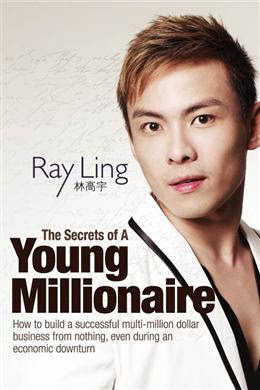
Book Review 2010: The Secret Of A Young Millionaire

Posted by Kris | Sunday, May 30, 2010 | | 3 comments »


I have been reading a lot lately. This is one of the new local book releases into the market. The book is about Ray Ling , a Sibu Sarawakian who became a millionaire by the age of 26 through MLM. Btw, he is now 31 years old, according to his Facebook account information.

On the reason why I bought this book , is honestly.... the nice clean design book cover (Millionaire & Secret sounds interesting) and Ray's handsome face..(I can hear a pin dropping in the walkway and jaws gawking at me. I am straight, okey!! and are the few minority of men who will admit if a guy is good looking). After seeing his Facebook account, you will find out that this picture is heavily "adobe photoshopped" to make him look fairer..LOL

The book itself tell his story from zero to hero to zero again and back to a hero again by setting up IBC corporation which generates millions of revenue through MLM marketing. Honestly, I never heard of this company before and the company is said to have branches all over major cities in Malaysia. IBC Corporation is said to be a very well-known company in Taiwan. A lot of the news about his company is in chinese, thus I will let my readers to find out by themselves on this subject matter.

The book content shows a very realistic and honest view given by Ray on being an entrepreneur, and are littered by Chinese proverbs. I really can feel the honesty coming from Ray, speaking on his turbulence experiences reaching the top. (Although the book left a gaping hole on how he became hero to zero during his early 20s successes. That is an interesting portion of his story that I am very curious to know about so that we can learn something from it. Pitfalls to avoid when you on the top of the world, etc)

His advice to aspiring entrepreneurs are very sound and grounded. Pretty layman without any fancy or difficult to achieve ideas/complex philosophies. That's a major plus point.

The only thing that i would like to comment on this book is the periodic bad grammar on certain chapters as though that the book was written in Chinese (yes, there is a chinese version of the book) and was translated to English using softwares like Google Translator. Proof-reading is almost non-existence on the affected chapters. It was so bad that somehow I started to wonder whether the book was written by a few individuals as I noticed that the writing style changed a lot from chapter to chapter. This is quite evident even when excluding the bad grammar on certain chapters. Nevertheless, the consistency of the his ideas along various chapters kept my doubts at bay. I give him the benefit of the doubt :)

My rating for this book is 3.5/5.

+ Honest opinions on the business world
- Poor proof-reading efforts on the book

P.S I saw that this book is sold in Borders and Popular. The book is sold for RM38.90.


FA & TA Versus Random Walker

Posted by Kris | Tuesday, February 03, 2009 | | 0 comments »

Finished reading this book during the long holidays. A very interesting book backed by facts. 


A foreword from Wikipedia
A Random Walk Down Wall Street, written by Burton Malkiel, a Princeton economist, is an influential book on the subject of stock markets. Malkiel argues that asset prices typically exhibit signs of random walk and that one can not consistently outperform market averages. The book is frequently cited by those in favor of the efficient market hypothesis. As of January 2008, there have been 23 editions.

Literally, this book is a debate on the effectiveness of fundamental and technical analysis on the stock market compared to hypothesis that the efficient market theory holds in the stock market. It means that for the believer of the efficient market, mastering FA & TA cannot make you rich at all. Malkiel throughly lambasted FA & TA analyst backed by statistical findings of mutual funds, analyst calls, etc.

He also explained the following interesting facts and theories inside the book.

1. How a bubble grows and goes burst.(tulip mania, tech bubble, South Sea tragedy)
2. Assessing risks mathematically and how it relates to gains. Conclusion: More risk means higher reward, thus NO PAIN NO GAIN. 
3. The history of stock valuation and evaluation methodologies/theories 
4. How buying an index fund is a good way to invest
5. "Past performance does not reflect future performance" a common statement found in mutual fund prospectus: Why alot of mutual funds fail to perform above the average index returns.
6. An intro to options and future derivatives

A good read and it really make me think outside of the box towards my journey to financial freedom.

Rating: 9.0/10


7 x 4 = 28 years..Ripley Believe it Or Not!! Joseph's Cycle

Posted by Kris | Thursday, October 30, 2008 | , | 0 comments »


Introduced to this book by an experienced broker on 2006 during the bull market during an big investment expo. Hard to believe during that time that a bear market will commerced 2 years later, as the stock market just keep on rising even though there were several notable bad news like Yen carry trade unravelling, interest rate hikes, etc.

The think that caught me was the title of the book, Joseph's Cycle which relates to the biblical story of Joseph who was given a vision by GOD that there will be 7 years of good years and 7 years of drought/famine striking the land of Egypt. Because of God's gift of prophesying, Joseph was promoted to the 2nd right hand man of the Pharaoh. Unbelieavable huh, for a man that once was a lowly slave sold and betrayed by his own brothers. 

Thus, he stored harvest during the good years and managed to use this later on to control the lands of Egypt by exchanging the scarce food for lands/material wealth during the 7 year famine.

I actually read the entire book in 1-2 hours sitting at Borders,(i am a reading speed demon :P)  but unfortunately i did not  buy the book. Till this day, i still cannot find this book in the local Borders store even though i check out the financial corner every time i went in..LOL. It is registered as available in system but cannot find it physically...

Nevertheless, in short the book shows that historically the bull and bear market repeats itself every 7 years just like the story of Joseph. My friend is asking for the name of this book when I told her that in 2006 that the recession will come in 2008/early 2009 because the start of the bull market was 2001 according to this book. 2006 was the in the midst of a spectacular bull run year so what i stated during that time sounded like bull-shit.Honestly I am not a firm believer during that time also but nevertheless, it showed historical proof of each bull and bear market cycle.

NOTE THAT THIS BOOK WAS WRITTEN AROUND ~2003, if i am not mistaken when i read it in 2006!!!

Proverb of the Day : HISTORY TENDS TO REPEATS ITSELF.

Joseph Cycle Years

1959 Bottom

1967 Top

1973 Bottom

1980 Top

1987 Bottom

1994 Top

2001 Bottom

2008 Top

Economy shrinks in 3Q, signaling recession
Thursday October 30, 10:21 am ET 
By Jeannine Aversa, AP Economics Writer

Economy shrinks in third quarter as consumers retrench by most in 28 years, sign of recession

WASHINGTON (AP) -- The economy jolted into reverse during the third quarter as consumers cut back on their spending by the biggest amount in 28 years, the strongest signal yet the country has hurtled into recession


Market Wizards :Interview With Top Traders - Jack D. Schwager

Posted by Kris | Monday, October 15, 2007 | | 0 comments »


I have almost finished reading this fantastic book about some of the world's greatest trader and investor. The book is easy to read and enjoyable even if you are not into investing or a newbie to the world of stock trading.

Market Wizards is a book written by Jack D. Schwager and published in 1988 in which he interviews a wide range of traders with excellent track records of profitability.

The book contains four parts covering interviews with traders in a wide range of markets such as stock indexes, futures, options trading, commodities and currency trading. Their trading field are quite diversified as they are able to practically trade in anything that they can get their hands on!! Some of the traders prefer a certain market to do their trading though.

The interviews contain a mixture of facts about the trading careers of the interviewees, their philosophy, and many trading anecdotes. After each of the interviews, Schwager summarises what he believes are the key things to be learned from that particular trader.

The interesting part of this book is that at the beginning each chapter, it has a introduction on each interviewee's trading background and history. Some started with zero experience and through persistent, hard work became what they become today. A good mentor at the beginning of the journey really help them to overcome the initial learning curve. As they matured, they begin to developed their own trading methods and some even surpassed their teacher.


Any gurus out there reading this and is interested to accept disciples, please don't hesitate to contact me any time . :)

Below is a summary of what i think constitutes a good trader/investor/speculator that i digested from the book.

1. Sound capital and risk management. Religiously followed the game plan that they set after they entered their trade. Able to cut loss no matter how painful it is.

2. Nerve of steel. You really got to have that if even you are a small time trader. Trading with your hard earn money has a major psychological effect when it comes to making trading decisions. It is not like the Bursa Pursuit game where there are no real money involved and you can simply shoot which stock to buy. I bet a lot of the players do that :P

3. Never give up. Some of the interviewees paid hefty tuition fees when they started off to the extend of borrowing money from family and friends. I am not recommending you to do that though.None of them had a smooth journey. Even though they had mastered the fine art of trading, they do stumble sometimes during their illustrious career. But that did not stop them at all!!

4. They have a immerse passion for trading. They really enjoy what they do everyday and accepts winning & losing as part and parcel of the game. (who wouldn't be happy if everyday you are able to make small fortune). From the interviews, winning/accumulating wealth is no longer important for them anymore. It is the game itself that captured their souls.

5. Successful trader have small egos. Almost all the interviewees stressed that being able to admit a mistake and quickly get out of a losing position is vital for their survival.

6. Trading requires extensive homework and hard work. They don't listen to other stock gurus advice even though they acknowledged their capabilities and talents. They make their own judgement based on their trading style.
7. There is not such thing as luck in stock trading. Lady luck could not possibly give consistent profits like what these people are doing everyday for years. The trading world is not a big casino.

8. Never over trade and put everything on a single bet. It is a huge mistake to do so as you might lose everything in a single punt. This one of the popular mistakes that the traders did when they started. Over trading using margins will put immerse unnecessary pressure when the market turns against you.

My take on this book : 8.5/10 ( a good insight into the minds of what it takes to be a successful trader/investor)